mh.MUHAMMAD HUSNAIN

01 / RESEARCH & PUBLICATIONS

Research & publications

Fine-grained AI for hyperspectral imagery, agricultural sensing and visual understanding.

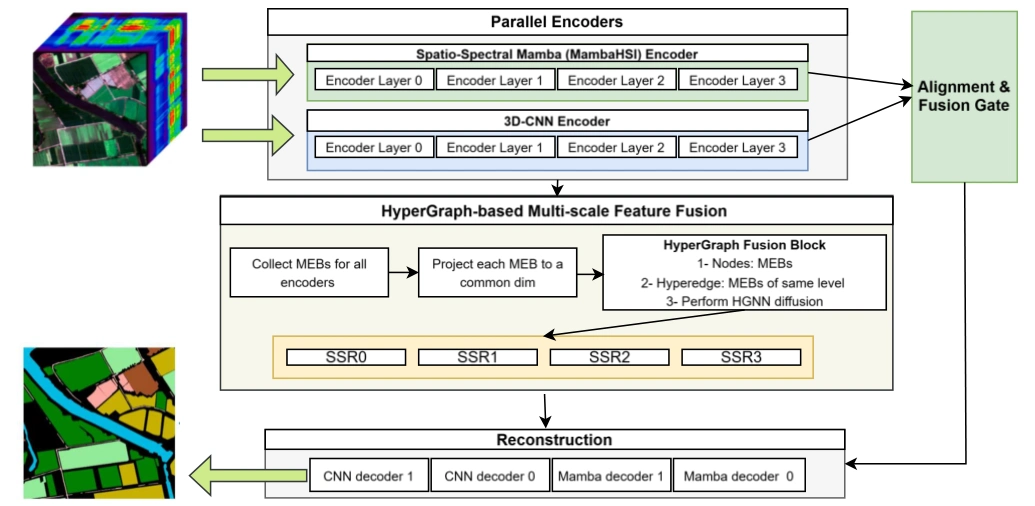
PatchHyperGraphOut architecture · expand figure
PatchHyperGraphOut architecture
PatchHyperGraphOut architectureMuhammad Husnain et al. · IEEE IGARSS 2026 poster, method panelPublication source

FEATURED / IEEE IGARSS 2026

PatchHyperGraphOut

Local detail and long-range context, processed in parallel. Hypergraphs connect features across scales.

Explore the paper
54%fewer parameters
17%lower GFLOPs
+9.31AA points / Matiwan
+7.97AA points / Qingpu

Compared with PatchOut in the IGARSS 2026 poster experiments. Results are specific to the reported datasets and evaluation setup.

02 / PUBLICATION ARCHIVE

Six papers. Several perspectives.

PatchHyperGraphOut architecture
PatchHyperGraphOut architectureHusnain et al. · IGARSS 2026 posterPublication source
2026Remote sensing

IEEE IGARSS 2026 · Paper 4141

Fine-Grained Pixel-Wise Hyperspectral Land-Cover Classification in Large-Scale Scenes Using Patch-Based Hypergraph Feature Enrichment

A parallel 3D-CNN and Mamba encoder reads each raw hyperspectral patch. Hypergraph feature enrichment connects information across scales to improve fine-class recognition in large scenes.

Method & authors

An alignment and fusion gate brings local boundary cues together with long-range context. A hypergraph built from training-patch embeddings enriches decoder skips. Evaluated on Matiwan and Qingpu using region-based splits and sliding-window inference.

Muhammad Husnain, Ali Zia, Vivien Rolland & Jun Zhou

Find on Google Scholar
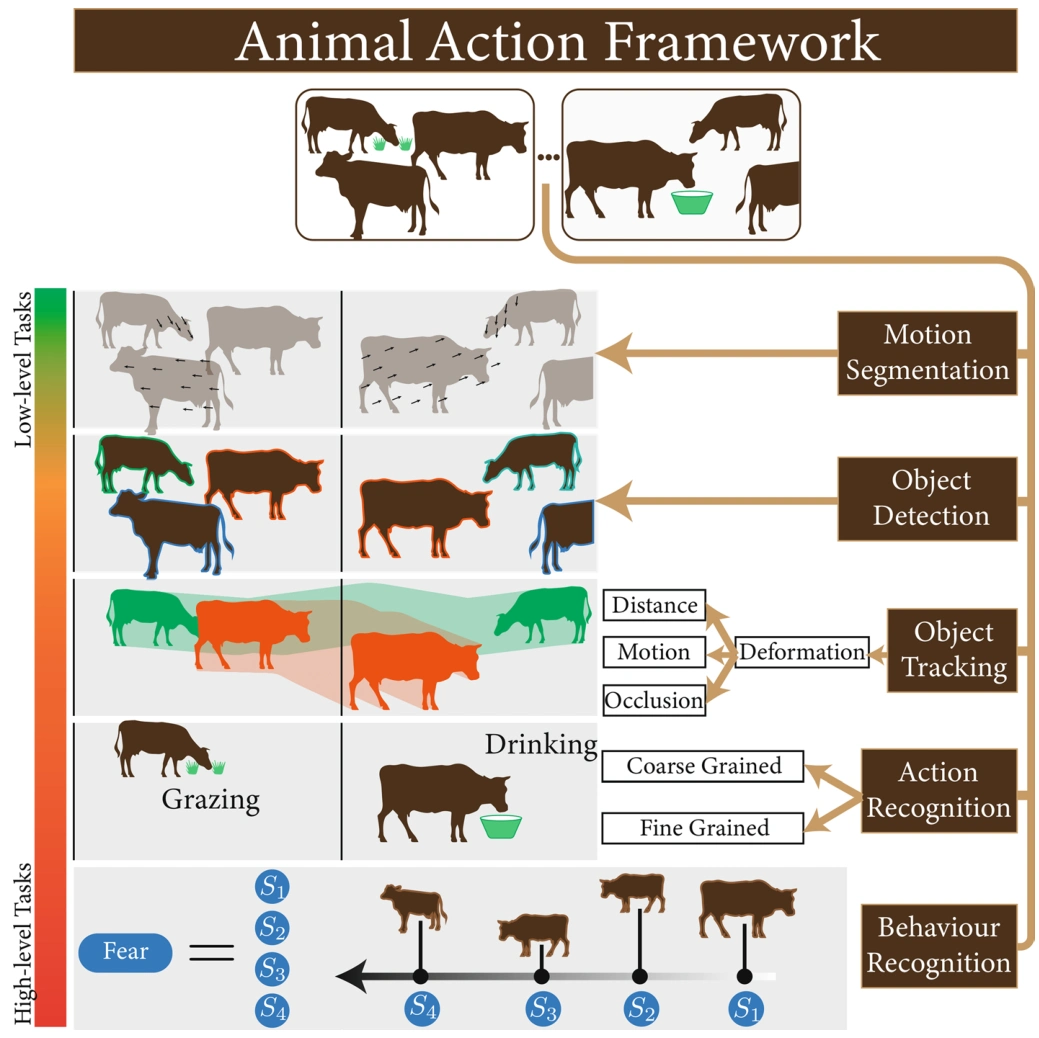
Animal action recognition framework
Animal action recognition frameworkZia et al. · Artificial Intelligence Review, Fig. 1 · CC BY 4.0Publication source
2026Computer vision

Artificial Intelligence Review · 59, 133

A review on vision-centric coarse to fine-grained animal action recognition

A review of coarse and fine-grained animal action recognition, including datasets, vision methods and multimodal approaches.

Method & authors

Examines subtle behaviours, outdoor occlusion and dataset limitations. Connects detection, tracking, pose and action analysis with practical evaluation challenges. Published 16 March 2026.

Ali Zia, Renuka Sharma, Abdelwahed Khamis, Usman Ali, Xuesong Li, Muhammad Husnain et al.

Read open-access paper
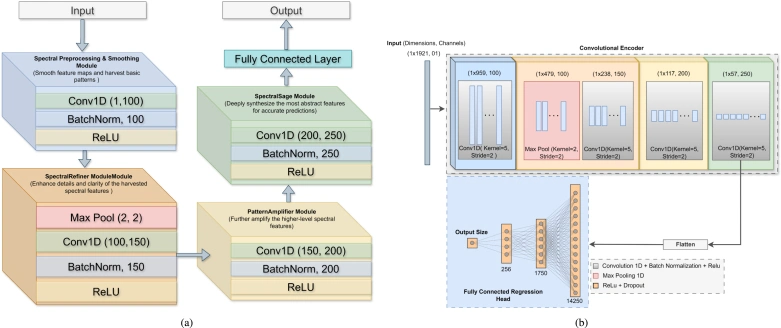
CNN encoder and regression architecture
CNN encoder and regression architectureZia et al. · Current Research in Food Science, Fig. 1 · CC BY-NC-ND 4.0Publication source
2025Spectral AI

Current Research in Food Science · 10, 101030

Unlocking chickpea flour potential: AI-powered prediction for quality assessment and compositional characterisation

Combines near-infrared spectroscopy and deep learning to estimate chickpea flour quality and composition without destructive testing.

Method & authors

Uses 136 chickpea varieties to compare CNNs, vision transformers and graph convolutional networks, with the best-performing CNN compared against partial least squares regression.

Ali Zia, Muhammad Husnain, Sally Buck, Jonathan Richetti, Elizabeth Hulm, Jean-Philippe Ral, Vivien Rolland & Xavier Sirault

Read published paper
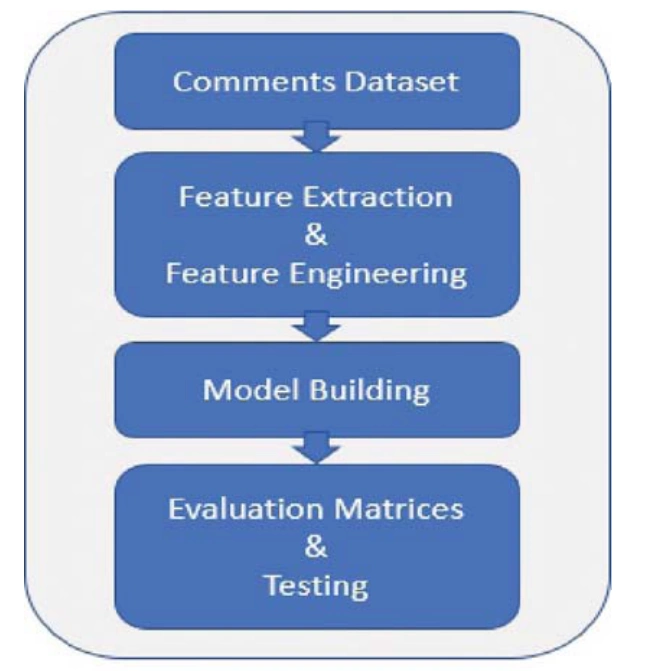
Toxic-comment classification workflow
Toxic-comment classification workflowHusnain, Khalid & Shafi · IEEE ICAI 2021, Fig. 1 · © IEEEPublication source
2021NLP

IEEE ICAI 2021 · pp. 22–27

A Novel Preprocessing Technique for Toxic Comment Classification

Investigates text preprocessing for toxic comment classification, building on earlier experiments with binary and multilabel toxicity prediction.

Method & authors

Part of my early work in sentiment analysis and NLP, using Python, scikit-learn and NLTK.

Muhammad Husnain, Adnan Khalid & Numan Shafi

View DOI record
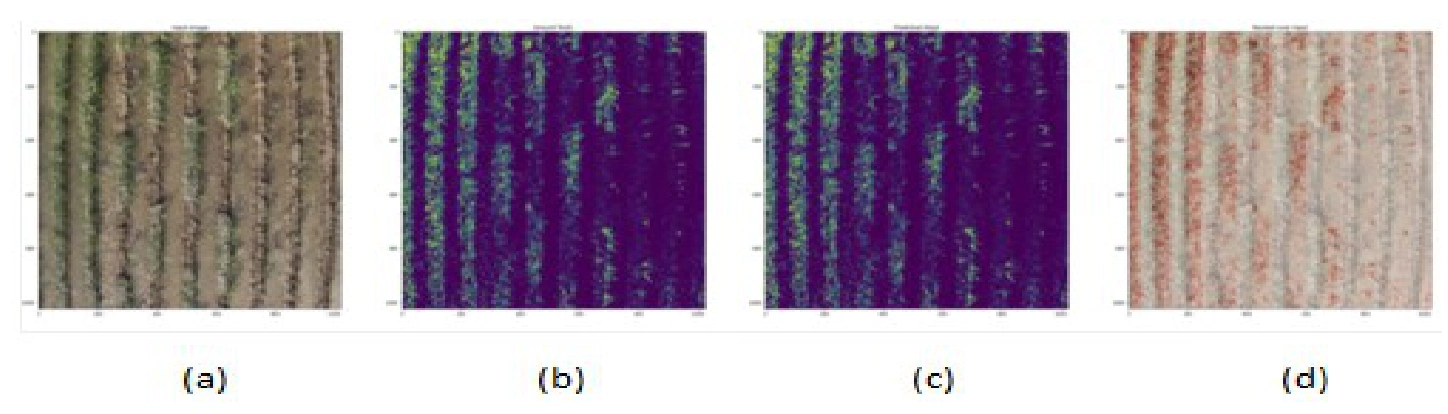
UAV weed segmentation examples
UAV weed segmentation examplesAsim et al. · ACRS 2021, Fig. 1 · RGB, ground truth, prediction and overlayPublication source
2021Remote sensing

42nd Asian Conference on Remote Sensing

Weed identification using vegetation indices and multispectral UAV imaging

Uses UAV imagery, vegetation indices and U-Net segmentation to identify weed regions in maize at later growth stages.

Method & authors

GNDVI- and NDRE-derived reference masks guide the segmentation pipeline. The paper reports IoU of 0.81 for GNDVI and 0.75 for NDRE.

Noor Asim, Muhammad Shahzad Sarfraz, Muhammad Ahmad, Numan Shafi & Muhammad Husnain

Read proceedings PDF

Publication records and links are attached to each entry. Manuscripts and ongoing experiments appear separately below.

INSIDE THE CHICKPEA PAPER

From spectral signals to graph structure.

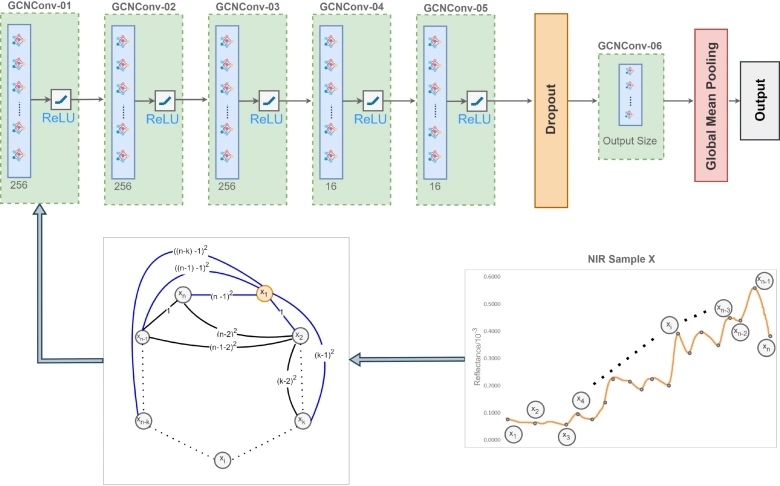
Mapping NIR spectra to a graph for regression · expand figure
Mapping NIR spectra to a graph for regression
Mapping NIR spectra to a graph for regressionZia et al. · Current Research in Food Science, Fig. 4 · CC BY-NC-ND 4.0Publication source

03 / THE RESEARCH LAB

Questions I’m working on.

Ongoing projects and manuscripts. These are research directions, not claims of published or production-ready systems.

Ongoing research

FG-Guard

Post-training refinement of hyperspectral label maps. The aim is to recover genuine 1–4 pixel objects while suppressing false small blobs and protecting correct predictions.

The central challenge

Finding more tiny objects also risks introducing false positives. I investigate spectral verification, guarded region selection and evaluation that distinguishes corrections, damage and wrong-to-wrong changes. Synthetic gains still need stronger real-scene validation.

Research tooling

HSIForge

A unified experimental codebase for hyperspectral datasets, models, reproducibility and class- and boundary-level evaluation.

Experiments span CNNs, Transformers, Mamba-based models and foundation-model approaches.

Explore my GitHub
Manuscript in development

Fine-grained HSI review

A synthesis of AI methods, datasets and evaluation protocols for fine-grained hyperspectral analysis, with attention to limited supervision, mixed pixels and boundaries.

Experimental directions

Structure-aware state-space models

Exploring dual-stream and guided Mamba models, higher-order representations and cross-scene generalisation under limited supervision.

A RESEARCH QUESTION YOU CAN EXPLORE

Smoother isn’t always more accurate.

A neat-looking map can hide a real object. Local smoothing favours whichever class dominates a neighbourhood, so small regions and narrow features can lose their identity.

These deterministic toy scenes apply a 3×3 majority filter to class labels. They illustrate a failure mode; they are not outputs of a trained model or a claim that every model behaves this way.

OriginalRepeated smoothing

Four pixels. One genuine object.

The mint square is a real minority object. In a 3×3 neighbourhood, its four pixels lose the majority vote to the surrounding class.

REFERENCE LABELSBefore smoothing
Blue: surrounding class · Mint: object or region · Amber: fine class. White outlines mark the focus pixels.
AFTER MAJORITY FILTERING1 smoothing pass
The object disappears into its surroundings.
0 / 4focus pixels retain their class
4focus pixels lose their class
99.0%of all pixels stay unchanged

WHY A GLOBAL SCORE CAN HIDE IT

A small denominator changes the story.

Losing four pixels changes only 1% of this map, but loses 100% of the tiny object. A whole-map summary and an object-level measure answer different questions.

WHY HYPERSPECTRAL DETAIL MATTERS

Similar-looking isn’t the same material.

Hyperspectral sensors measure many wavelength bands. Subtle spectral differences can separate related land-cover materials, while a spatial model or refiner may still favour the surrounding class.

Weak supervision, mixed pixels and uncertain boundaries make preserving those distinctions harder.

THE OTHER SIDE OF THE TRADE-OFF

Keep the signal. Reject the false island.

A tiny region can also be noise. Preserving every small blob creates false positives; smoothing every blob destroys genuine objects. The aim is to use spectral evidence and context to distinguish the two.

This motivates my work on guarded map refinement, fine-class evaluation and higher-order representations.

Explore my ongoing research

Explore the portfolio

Esc to close · Ctrl / ⌘ + K to open